
50 Likely Visa Interview Questions at the US Embassy – Student, Tourist, Visitor and Immigrants
October 6, 2018
Requirements for Starting Canadian Express Entry Visa
April 24, 2019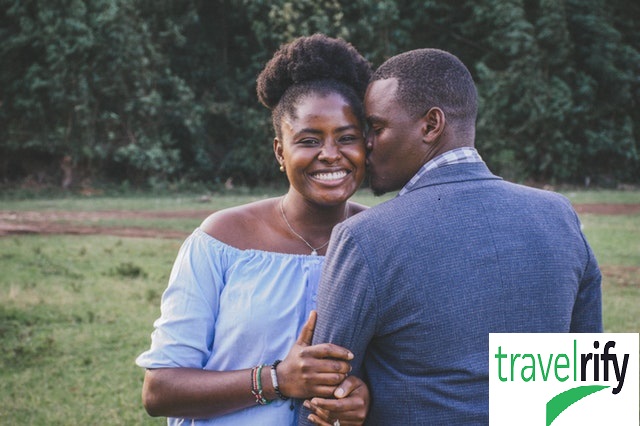
Understanding the K1 Visa for Nigerians
The fiancé(e) K-1 nonimmigrant visa is one of the more commonly requested visas for entry into the United States. It is issued to the fiancé or fiancée of an American citizen in order to permit the alien to be admitted into the US for ninety (90) days for the purpose of marriage and, if desired, submit an application for a green card (U.S. lawful permanent residency) after the marriage has been concluded.
This type of visa is for the foreign-citizen fiancé(e) of an American. The bulk of applications submitted for K-1 visas are successful, according to data on the rates of visa refusal released by the U.S. State Department.
But that does not mean you can be casual or careless in the preparation of your application. You need to follow strict regulations and bear in mind that a lot of issues can make a K-1 visa application to be rejected. In this write-up, we will discuss all you need to know about the K-1 visa and how to apply for one as a Nigerian.
How to Obtain a K1 Visa in Nigeria
Here’s all the necessary info you must have at your fingertips about the process of obtaining this visa as a citizen of Nigeria:
What Is the Fiancé(e) K-1 Nonimmigrant Visa?
This nonimmigrant visa permits a foreign national fiancé/fiancée of a citizen of the United States to travel to the country and get married to the petitioning American citizen sponsor within a period of 90 days of entry into the US.
The Documents You Need for a K-1 Visa
You (the foreign-citizen fiancé(e)) and your eligible children that are applying for K-2 visas — if applicable — will be required to come to the visa interview with the under-listed forms and documents:
- A passport that is valid for travel to the US and is valid for at least 6 months beyond the period you intend staying in the United States (with the exception of circumstances where country-specific agreements give exemptions).
- Completed Online Nonimmigrant Visa Application Form DS-160. You (along with any eligible children that are applying for K-2 visas) have to fill Form DS-160 and then print the DS-160 confirmation page and come along with it to your interview.
- Police certificates are required from your current country of residence as well as every other country in which you’ve lived for six (6) months or longer since age sixteen (16). (Police certificates are equally needed for accompanying children that are of 16 years of age or older.)
- Death or divorce certificate(s) of any former partner(s) for the two of you and the American citizen sponsor
- Proof of financial backing (Form I-134, as well as Affidavit of Support, may be needed for this)
- Medical examination (vaccinations are not compulsory)
- Two 2 by 2 photographs. Learn more about Photograph Requirements
- Proof of relationship with your American citizen fiancé or fiancée, as the case may be
- Evidence of payment of the necessary fees
The Procedure for Obtaining Your K-1 Visa
This program is a collaborative procedure that involves USCIS (U.S. Citizenship and Immigration Services), DOS (U.S. Department of State), in addition to CBP (U.S. Customs and Border Protection).
First Step: Petition Filing at USCIS
- An American citizen, which is the petitioner, files Form I-129F for petitioning U.S. Citizenship and Immigration Services to recognize a foreign citizen (you, the beneficiary) as the person’s fiancé(e).
- The USCIS does a review of the documents which are submitted as required evidence stating the 2 parties can get married; intend to do their marriage within ninety (90) days of the admission of the beneficiary, and have both generally met in person within 2 years prior to the filing of the petition.
- The Immigration Services does a background check for criminal records, national security, along with other information on the petitioner and you, who are the beneficiary.
- An approved Form I-129F only implies the USCIS has recognized the claimed relationship between the petitioner and you (the beneficiary). This approval doesn’t give permission to the beneficiary to travel to the US, nor offers any guarantee that the U.S. Department of State will issue them a K-1 visa.
- The Immigration Services then sends the approved petition to the U.S. Department of State National Visa Center (NVC), where it is forwarded to the embassy or consulate in which the foreign fiancé(e) will submit an application for the K-1 visa.
Second Step: Submitting Visa Application at DOS
- The USCIS National Visa Center notifies the petitioner when it’s time for the Nigerian fiancé(e) to apply for their visa.
- The foreign (Nigerian) fiancé or fiancée submits their K-1 visa application at the US Embassy or consulate, which is indicated on their Form I-129F, where they will submit identity and civil documents, evidence of their relationship with the American citizen sponsor and a medical exam that was conducted by an approved physician.
- DOS carries out background checks on you, the visa applicant, confirming the authenticity of your details like fingerprints and other checks that are similar to the ones done by the Immigration Services. DOS will also check as its systems as well as other interagency databases. A consular interview will be done as well.
- If the U.S. Department of State consular officer doesn’t certify the relationship bona fide, the K-1 will not be issued, and the K-1 petition will be sent back to the U.S. Citizenship and Immigration Services.
- The U.S. Department of State consular officer is the one to determine if any grounds of inadmissibility or similar ineligibilities are applicable (national security, criminal, medical examination, etc.) and if you (the applicant) are eligible to request waivers of these grounds.
- This officer also decides whether to grant you the K-1 visa. The validity of these visas is for up to six (6) months as well as a single entry.
- As with other US visas, a K-1 doesn’t serve as a guarantee of admission to the US.
The last 3 steps for obtaining the K-1 are, inspection at a Port of Entry (done by the CBP); adjustment of your status (conducted by the USCIS); and removal of conditions (also done by the USCIS). You can learn more about these 5 steps and other details here. Equipped with the information provided in this article, you can gain a good understanding of getting the K-1 visa as a Nigerian to facilitate your marriage with your would-be American spouse.
Need to process admission and get Visa to study abroad? Send us a message now!
info@travelrify.com